(Note: These are past CFPs stored for archival purpose only)
JBS Call for Papers Vol. 9 No. 1 (Submission deadline 15 October 2026)
Goddess Kālī
Keywords: Mother Goddess, Bird Goddess, Harappan cultic figurines of the feminine, skull faced figurines from Harappan civilization as Destructrix, Creatrix, Prakṛti of Tantra and Sāṃkhya, Ādyā, Nityā, Avyaktā, Jagadkāraṇa, Supreme Goddess, Goddess Kālī, Dakṣiṇakālī, Vāmākālī, Rakṣākālī, Śmaśānakālī, Mahākālī, Guhyakālī, Siddhakālī, Precursors of Kālī like Cāmuṇḍā and Carcikā, Saptamātṛkā, Daśamahāvidyā, Śaktipīṭha, Siddhapīṭha, Śakti, Śākta, Kālī Kula, Kaula, Kālī Yantra, Tantras of Kālī, Dhyānamantras of Kālī in Bṛhad Tantrasāra of Krishnananda Agambagish, Possible Allusions to Kālī in Rātri Sūkta of Ṛg Veda, Kālī in Muṇḍaka Upaniṣad, Kālī in Mahābhārata, Kālī in the Purāṇas (including Śrī Śrī Caṇḍī), Pala and Sena Periods of Bengal, Buddhist Goddess cults, Nairātmā, Vajrayoginī, Chinnamastā Kālī, Hindu and Buddhist Tantra and Kālī, Kālacakrayāna and Sahajayāna and Kālī, Kālī in the late medieval era, Kālī and Baro Bhuiyan (particularly King Pratapaditya), Dakat Kālī of middle ages, Kālī as patron deities of families and localities and communities, Kolkata as Kālī Kṣetra
Journal of Bengali Studies (ISSN 2277 9426), an online, open access, interdisciplinary, double-blind peer-reviewed academic journal to study the history and culture of the Bengali people, is glad to announce the Call for Papers for its upcoming issue (Vol. 9 No. 1) on Goddess Kālī.
This issue of JBS will explore many dimensions of Kali as the Supreme Goddess: Her increasingly prominent position within the evolution of the Goddess religions in this part of the world: Her philosophy, theology, mythology, iconology and rituals; Her prehistory, proto-history, history as well as Her contemporaneity; Her popular religious celebrations round the year and the crucial occasions of Her annual worship; Her local manifestations as the guardian deities of various communities and families and places; Her esoteric cults, initiatory orders, scriptural discourses; Her myriad textual mentions spanning from epics, Tantras and Purāṇas; Her archaeology that might predate Her authoritative inclusion into the Brahminical pantheon; Her stories, myths, legends and popular representations in art and culture, literature and society; above all, Kālī as the Guardian Goddess, or Patron Deity of Bengal: ‘Kālikā Vangadeśe Ca’.
JBS Vol. 9 No. 1 is going to be published on the occasion of Dīpānvitā Kālī Pūjā on the tithi of Kārtikī Amāvasyā, 8 November 2026.
Goddess Kālī
The topics for submission will include the following but will not be limited to the same:
- The living traditions of the Goddess Kālī vis-à-vis the prehistoric as well as historical antiquity of Goddess worship. Sukumar Sen for example observes that the concept of a dark Goddess of night as the creatrix of the universe is very primitive and is attested in the Indo-European myths including Vedic scriptures (Prabandha Sankalan 3rd Vol & 4th Vol). At the same time, some forms of a terrible Supreme Goddess controlling birth and death could have existed in the early prehistory of South Asia within the arguably non-Vedic Harappan Civilization, as Debiprasad Chattopadhyay in his Bharatiya Darshan proposes. For a detailed discussion, see Tamal Dasgupta’s articles “Ma Kalir Utthan” and “Ma Kalir Utshoron” published in the Shoptodina Journal (ISSN 2395- 6054), accessible at https://shoptodina.wordpress.com
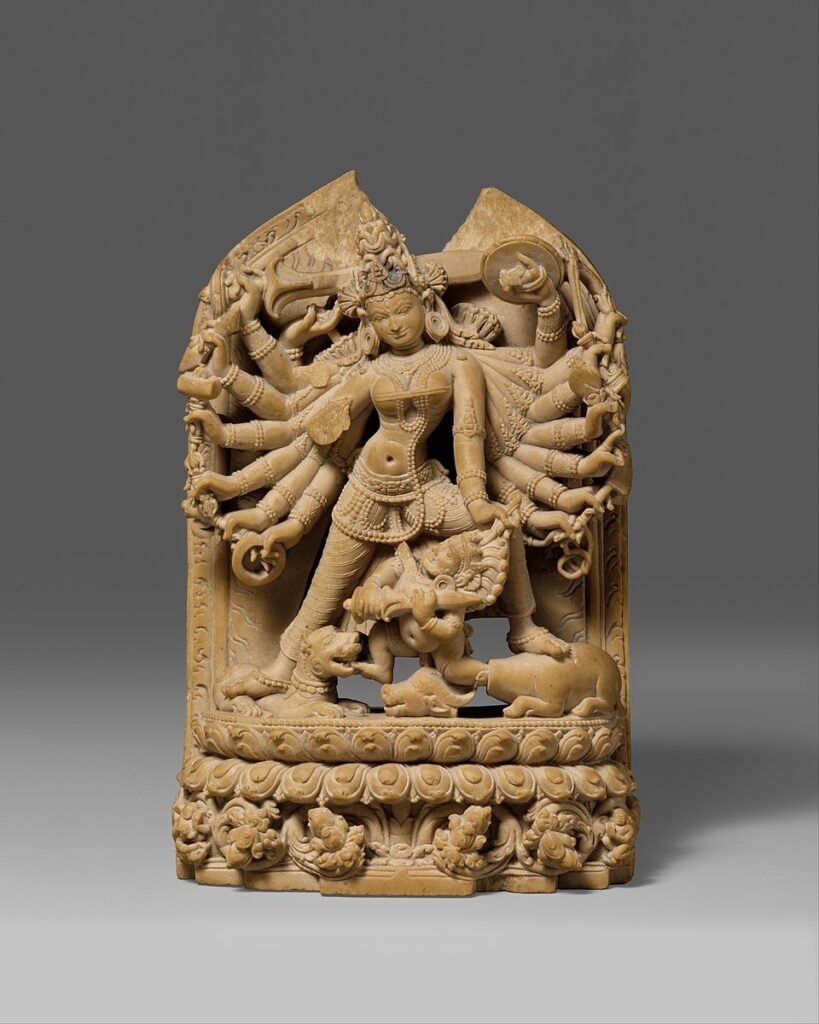
- Historical development of the supreme creatrix: for example, Surendranath Dasgupta in his A History of Indian Philosophy argues that the evolution of the current iconology of the Goddess where She stands atop a corpse (Śavaśiva) captures the essence of a dynamic Prakṛti and inert Puruṣa.
- The philosophy, theology, scripture and textual discourse of Goddess Kālī.
- Popular religious celebrations of Goddess Kālī and the local goddesses worshipped by the Bengalis across the region.
- Kaula orders and initiatory cults of the Goddess Kālī: Tantra and beyond.
- The archaeo-religious perspectives on the Goddess Kālī. The Bird Mother Goddess of Pandu Rajar Dhibi, the various cultic feminine figurines of Harappan Civilization, particularly those indicating the cult of animal sacrifice (including sacrifice of goat and buffalo), and finally the Gangaridai Goddesses: do they contribute to the evolutionary trajectory of Goddess Kālī?
- The ancient and early medieval history of the Goddess Kālī: From the Rātri Sūkta of Ṛg Veda, hymn of Muṇḍaka Upaṇiṣad, Kālī in Mahābhārata, Kālī in Śrī Śrī Caṇḍī to the Pala and Sena period religion, rituals, texts and iconography.
- Many forms and fragments of the Goddess: Śaktipīṭha and the Goddess Kālī, Goddess Kālī and Daśamahāvidyā pantheon.
- The tremendous rise of the Goddess during the late medieval period. Sarvananda Thakur, Brahmananda Giri. Worship of the Goddess during the war-torn times of Baro Bhuiyan. As per popular perception and legend, Krishnananda Agambagish created the current iconography of the Goddess sometime during the sixteenth century, but that is a myth. A similar iconography of Kālī can be found in the Sena period scripture of Bṛhaddharmapurāṇa’s description of Daśamahāvidyā (for details see the aforementioned articles of Tamal Dasgupta) which was composed some four centuries before Agambagish. Clearly, this iconography of Kālī was not created but might have been revived by Agambagish during the late medieval period.
- Dakat Kālī or the Goddess of the Goons of medieval Bengal. Yavanamarddinī Kālī of Dakat Beni Ray.
- The role of King Krishnachandra of Nadia in popularising the worship of Kālī at the point of transition between the medieval and the modern periods of Bengal’s history.
- Ramprasad Sen and Kamalakanta Bhattacharya and the generic rise of Śākta devotional songs.
- Goddess Kālī and Rani Rashmoni.
- Goddess Kālī and the rise of revolutionary nationalist movement in Bengal in the early twentieth century are deeply intertwined. But interestingly the Goddess roots might have persisted even afterwards, as a little-known article in a little magazine is known to have made a curious claim that Naxalite leader Charu Majumder used to have an image of Sevak Kālī, a local guardian deity of the hilly district of Darjeeling. Majumder too hailed from this district. Whether this claim is true or not, it goes without saying that the deep, primitive roots of the Goddess were too tough to be destroyed by rational, progressive irreligiosity dominant among Bengali intelligentsia.
- Kālī at the margins: Chinese Kālī temple, Phiringi Kalibari, versions of Kālī worshipped at Mayang, Kālī among Western feminists.
- Goddess Kālī and our interesting times; Goddess Kālī and Kaliyuga (“Nanyadeva Kalau Yuge”, no other god in Kaliyuga but Kālī)
- Goddess Kālī and etymology: the black goddess, the goddess of time
- Kālī and Kālacakrayāna of Pāla period; Kālī and Sahajayāna movement of Naropa and Niguma.
- Tantric Buddhist precursors of Kālī: Nairātma as a type study
- Tantric Hindu precursors of Kālī: Cāmuṇḍā
- The contemporaneity of the Goddess Kālī: the increasing scholarly interest and popular curiosity in the Goddess. Western feminism and the Goddess renaissance; the lived traditions of the Goddess in Bengal.
- Goddess Kālī in the twenty-first century and beyond.
- Submission guidelines: Articles must be submitted via email to shoptodina@gmail.com with cc to editjbs@gmail.com
- Articles should follow MLA format (the ninth edition of MLA Handbook, 2021). Articles must be typed in ms-word, complete with bibliography and notes (if any), with a minimum word length of 3000 words and maximum word length of 15000 words. A separate bio-note should be attached in the email informing about the scholarly credentials and interests of the author including institutional affiliations etc. Reviews are also welcome. Reviews should have a minimum word length of 2000 and maximum word length of 5000 words, and should follow the aforementioned MLA format.
- Last date of submission: 15 October 2026.
- The author must not use the endnote/footnote function of ms-word and must manually provide the notes at the end of the article.
- For any query, feel free to email shoptodina@gmail.com and/or whatsapp/telegram (+91) 8017467479. The editorial board of JBS remains the sole and final authority on the decisions regarding the publication or non-publication of any submitted article in original or modified forms.
- Editor: Dr Rituparna Koley
- Check out our past issues at https://bengalistudies.blogspot.com and www.bengalistudies.com
JBS CFP for Vol 8 No 1 Deadline 05 October 2025
Journal of Bengali Studies (ISSN 2277 9426), an online, open access, interdisciplinary, double-blind peer-reviewed academic journal to study the history and culture of the Bengali people, is glad to announce the Call for Papers for its upcoming issue (Vol. 8 No. 1) on the theme of the Living Goddess Traditions. Bengal has been the hub of various goddess traditions and this issue will study the past memory and the present phenomenon of such goddess cults.
The Living Goddess Traditions
Archaic Goddess cults existed in different parts of our planet since our Homind pasts (e.g. Venus of Berekhat Ram, Venus of Tan Tan), and they can be found in the stone age of Homo sapiens as well (e.g. Venus of Hohle Fels), down to the copper age (various ancient civilizations including the Harappans). But following the descent of the iron age, goddess cults seemed to have receded in most parts of the world, while mighty cults of powerful male Gods replaced or eclipsed the Goddesses.
Today, the Bengali-speaking Hindus remain the only large community on earth, who celebrate their thriving Goddess traditions, where the Goddess is not relegated to the curiosity of a museum, or does not play a secondary fiddle to some other almighty male Gods, like certain other parts of South Asia (i.e. north India or south India), but where the Supreme Goddess is very much at the core of the contemporary experience of a large people (numbering 10 crore or more, and it is only for political reasons we desist from calling the Bengali-speaking Hindus a nation on their own).
The theme of this upcoming issue of Journal of Bengali Studies attempts to trace the existing, living traditions of the Goddess cults of Bengal back to the hoary antiquities of its (mostly forgotten) past, and aims to map the trajectory of the evolution of such Goddess cults from past to present. This issue intends to interrogate the possible connections of Bengal’s history and prehistory with a largely rootless present, which, in spite of all the modern, colonial, communist and communal upheavals, still manages to celebrate the Goddess cults which form one of the most important markers, if not the most important marker of Bengali identity.
So, we invite articles which will inspect the existing popular cults and religious practices of the worship of the various goddesses amidst the backdrop of the kernels of history which form the foundations to such living goddess traditions.
The topics for contribution will include the following (but will not be limited to the same):
★ Goddess and goddesses: The supreme Creatrix and the many manifestations of attendant goddesses.
★ Goddess and Tantra.
★ The Folk Goddess Cults: From antiquity to contemporaneity.
★ Goddess Kālī: Primeval Invocations (the Dark Goddess of the Night), Medieval Inventions (Kṛṣṇānanda Āgambāgīśa etc), Modern Inferences (from early modern Ramprasad & Kamalakanta to the twentieth century devotional songs of Pannalal Bhattacharya).
★ Goddess Durgā: Autumnal invocation of Goddess Ūṣā in Ṛgveda, Buffalo Sacrifice of Harappa, Chandraketugarh Goddesses, Post-Gupta Period and Śrī Śrī Caṇḍī, Pala Period Goddess Cults, Medieval Bengal and Caṇḍīmangala, Contemporary Durgā Pujo of public and private dispensations (Bonedi/elite and Baroari/collective). Festivity, Economics, Heritage and Popular Culture.
★ Goddess Tārā: The rise of the Great Goddess in Buddhist Tantra and Hindu Tantra to modern day Tarapith of Birbhum.
★ Pala Period Goddess Vajrayoginī and the contemporary Goddess Chinnamastā.
★ Sena cataloguing of the Ten Mahāvidyās in Bṛhaddharmapurāṇa and their lasting legacies of Tantric Goddess worship to this day. The other Mahāvidyās in the Goddess pantheon beyond Daśamahāvidyā.
★ Local Guardian Goddesses like Mṛṇmayī of Mallabhum, Kalyāṇeśvarī of Shikharbhum, Sarvamangalā of Bardhaman: Past lores and lived traditions.
★ Goddess Viśālākṣī: Local variations in iconology, ritual, styles of worship in the past lores and lived traditions.
★ Goddesses Lakṣmī and Sarasvatī: The evolution of their cults from antiquity to modernity within the domestic sphere, within the public sphere, respectively as the disburser of wealth and as the disseminator of knowledge, with reference to their iconographies and archaeomythologies.
★ Suggested Yakṣī cults and Chandraketugarh: The latent trajectory from the ancient to the medieval to the modern ages.
★ Śākta Rāsa (of Nabadwip and elsewhere).
★ Antiquarian Goddess Cults like the Bird Goddess and the Snake Goddess and their sublimations into various existing goddess cults like Mahāvidyā Bagalā and Goddess Manasā/Mahāvidyā Tvaritā).
★ The curious continuity of the early medieval Goddess Cāmuṇḍā/Carcikā to various lived traditions of Goddesses Petkati and Kankāleśvarī.
★ The lived traditions of Kuladevī or the Clan Goddess or the Family Deity: Past narratives and present practices.
★ The continuous serendipity of the discoveries of ancient and medieval goddess idols from obscure corners of Bengal: How the past communicates with the present.
★ The Śakti pīīthas of Bengal: Lores from the past, and lived traditions of the present.
★ Eponymous Guardian Goddesses of Settlements and the simultaneously rooted but floating identities of Bengali space (e.g. Kālī and Kalighat, Jessore and Yaśoreśvarī).
★ The lived traditions of Goddess worshippers: accomplished Sādhakas like Bamakhyapa of Tarapith, and their lasting legacies.
★ Evolution of Sākta theologies: Past moorings and contemporary traditions.
★ Last but not the least, the various non-Śākta worship of the Goddess in Bengal (including but not limited to the Vaiṣṇava worship of Kātyāyanī Durgā started by Nityananda Prabhu, or the Chinese Kali worship).
The minimum word limit of articles would be 3000 words, and maximum word limit would be 15000 words. Writers need to follow MLA format. Articles complete with bibliography and author’s bio-note should be submitted as email attachments in docx form by 05 October 2025 for this upcoming issue (expected to be published on the occasion of Kalipujo).
For any query, feel free to email shoptodina@gmail.com and/or whatsapp/telegram 9717468046. The editorial board of JBS remains the sole and final authority on the decisions regarding the publication or non-publication of any submitted article in original or modified forms.
Editor: Dr Rituparna Koley
Check out our past issues at https://bengalistudies.blogspot.com and www.bengalistudies.com